

Friday Nights
Who Doesn’t Love Friday Evenings? Or Chicken Soup?

༺☆༻
“And so I rehabilitate myself - staying up late this Friday night in spite of vowing to go to bed early, because it is more important to capture moments like this, keen shifts in mood, sudden veering of direction - than to lose it in slumber.”
― Sylvia Plath, The Unabridged Journals of Sylvia Plath

CHICKEN BROTH SOUP
The recipe for a Friday evening: a starry night, cool air, hide-and-seek played after sunset, and a holiday at grandmother’s house with no knowing when we would return.
When I think of Friday evenings, I think of childhood; of holidays we left for in the evening and Sunday mornings spent returning home. Somehow, the feeling carved itself so deeply into my mind that I remember Fridays almost like a holiday of their own.
Now, when I look at it, Friday evening feels like the moment when everything is finished; when the sun sets in its most assertive hue, as if carrying a promise. It is the hour when everyone slowly retreats into their homes one by one, hurrying back with bags in hand. Friday evenings are also for discovering newly released songs. Or a new film or series added to the library. Friday is my Monday for new discoveries; my Saturday for resting.
That is how Friday somehow became my favorite day. I call it my own personal holiday and spoil myself by making the most comforting meal for myself. I especially love chicken broth soup; as a child, the steam warming my face would remind me of long winter holidays. Afterwards, I lean back and watch the people of Friday evening, as if an orchestra were playing a concerto just for me. I button myself up, look into the bright, gleaming eyes of Friday evening, into its joy-spilling laughter, and greet it.

For the chicken soup:
(attention: the exact same measurements used in this recipe will be given)1 chicken thigh
1 chicken breast
1 large onion
2 carrots (one of them will always be eaten directly as natural retinol)
1 whole celery root
1 generous tablespoon of butter
1 regular tablespoon of flour
1 bowl of vermicelli
(oil, salt, and spices in this recipe will, as always, be measured by eye)
Sniffling, I watch the water running from the tap I just turned on. First thing: turn on the water. They say it is the most effective way to chop onions. Besides, I do not want any onion tears mixing into the food. The celery stalk I had leaned against the olive oil bottle on the counter toppled over. I fixed it, then washed my hands first. I look at the chicken boiling on the large burner of the stove. Bringing my face closer to the pot, I fanned the smell toward myself with my hand and, closing my eyes, judged the umami rising from it. The scent of black pepper and parsley stems was already inviting the inside of my mouth into a good meal.
Rubbing my hands together, I turned around and reached for my phone. I skipped to the next song in my playlist (playlist name, how to became a dua lingo?). The song that should be listened to at this stage: Bad Bunny – NUEVAYoL. Playing my own tiny drums, I watched the orange of the sunset spill into the kitchen through the window.
I started by pouring enough olive oil into the pot to wet the bottom. When the first warmth rose against my hand, I added the onion I had chopped for piyaz. Soon, it began lifting from the corners, swaying its belly to lively reggaeton. I stirred it and rolled in the carrots sliced into rings. The sunset was inside the pot now.
The sweet pores of the onion touching the bottom of the pan slowly began wrapping themselves around the carrots. The carrots deepened in color, as though they had absorbed all the oil in the pot. I brought the matchstick-cut celery stalks waiting on the board into the pot as well. Green, orange, and white… it looked like a hanging garden painted in pastels. My mother’s vines; the sun above, with clouds.
Whenever I got sick, I would immediately ask my mother if she could make me soup. She would rush to make it warm right away; the smell of the soup would straighten my back, and with its warmth, take the fire from my throat. The effect of that soup would show itself within a day. My mother made this soup with tomatoes and tomato paste. Especially with fresh chicken broth, or from the extra she had frozen away in containers. She would squeeze plenty of lemon over it too, taking away the heaviness of the broth. Slightly sour, the kind of taste that makes your mouth water.
As the heads of each vegetable, facing in different directions, began to glisten, I added a slice of butter so they could tan properly. The moment it touched the pan, it sizzled as if to say, all that was missing was me. I added a spoonful of flour too and stirred until it found its thickness. This was one of the little tricks I had taken from my mother’s recipe. For soups that cling a little more, I, too, found myself returning to my mother’s way. Then, using the small bowl, I added a bowl of vermicelli.
I took the chicken out of the water and placed it on the board. I strained the broth and set aside as much as I needed. I usually do half chicken broth, half tap water. All chicken broth feels too heavy to me. Slowly, I let the crackling sounds of the vegetables and vermicelli disappear beneath the water. From below, I must have looked like a giant. The oil from the chicken broth wrapped around the vegetables and rose to the surface in rings. Those oils seemed to pull it inward, as though vacuum-sealing it.
At wedding meals, it was tradition to make this soup thinner and oilier. Large pieces of chicken would be added from the beginning and cooked that way. The broth and oil blended into one another more easily, and the flavor turned richer because of it. As a child, the soup cooking in those cauldrons, inside that lake of oil, never really stirred my appetite. My throat would burn from the very first spoonful, and my hand would immediately reach for water. The rice they added would fall apart too quickly, and I could never quite understand what it was I was eating.
I watched the bubbling surface pop one small bubble at a time. Smacking my lips, I tasted it while it was still hot, just from the tip of the spoon. The real secret of this meal is taking a spoonful of the broth like this. There is nothing better than that tongue-burning taste while the steam still rises from it. (Between us, this is exactly how I always tasted my mother’s soups too.) I cut the now-cooled chicken thigh and breast into tiny pieces with a knife. I pulled the rest apart into strands with my hands. The vermicelli had swollen and drifted across the surface of the broth like thin strips of dough. While it still had some bite to it, I let the shredded chicken fall over the top.
The meat, the sharp-edged vegetables, the shining yellow oils, the vermicelli… all of them kept changing places inside the broth, like something rearranged by a current of air. I turned off the heat beneath the soup. I went into the other room and browsed through my computer for a while. A good meal deserved a good background; you had to choose something you could eat with your eyes closed to, something that would also keep you pleasant company. At this stage, reality shows and K-dramas are recommended.
Locking my hands behind my head, I got up from my seat. I placed a slice of bread beside a deep bowl and slowly filled it with soup using the ladle. I sat down at the table, dipped in my spoon, and pressed play. I felt the warm passage of a vermicelli strand caught on a piece of meat, resting over carrot and celery, slide down into my stomach. When an involuntary little oh escaped my mouth, it meant the recipe had worked. Looking at the crowd and lights outside the window, I let the soup dampen my face.
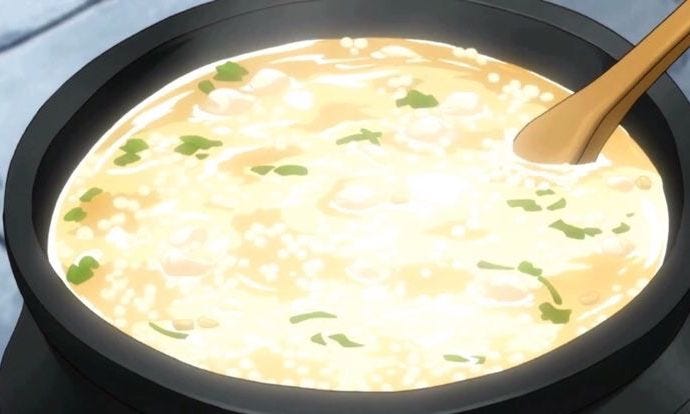
Come now, wouldn’t everyone take a bowl of chicken broth soup?
I have never been so enamoured by a recipe before, what a beautiful piece 🖤 For dinner tonight, it must be a chicken broth soup!
GOD this made me so hungryyyyy!!!!! I seriously love this <3 tbh this is the first time i have ever come across such writing/concept and I LOVE IT!!